
Stop Buying Ugly Lights and Try These Decorative Grow Light Options Instead
Your Plants Deserve Better Lighting (And So Does Your Home)
Decorative grow lights for indoor plants are purpose-built LED lights that support plant growth while looking good enough to leave out in plain sight — no ugly purple glow, no industrial clutter.
Here are the best types to know about:
| Type | Best For | Style Notes |
|---|---|---|
| Ambient floor lamps | Large statement plants | Sculptural, wood/metal bases |
| Pendant/hanging lights | Shelf displays, single plants | Minimal, architectural |
| Clip-on pot lights | Small pots, tight spaces | Discreet, compact |
| Integrated LED planters | All-in-one setups | Seamless, modern |
| Adjustable standing towers | Mixed-height collections | Versatile, sleek |
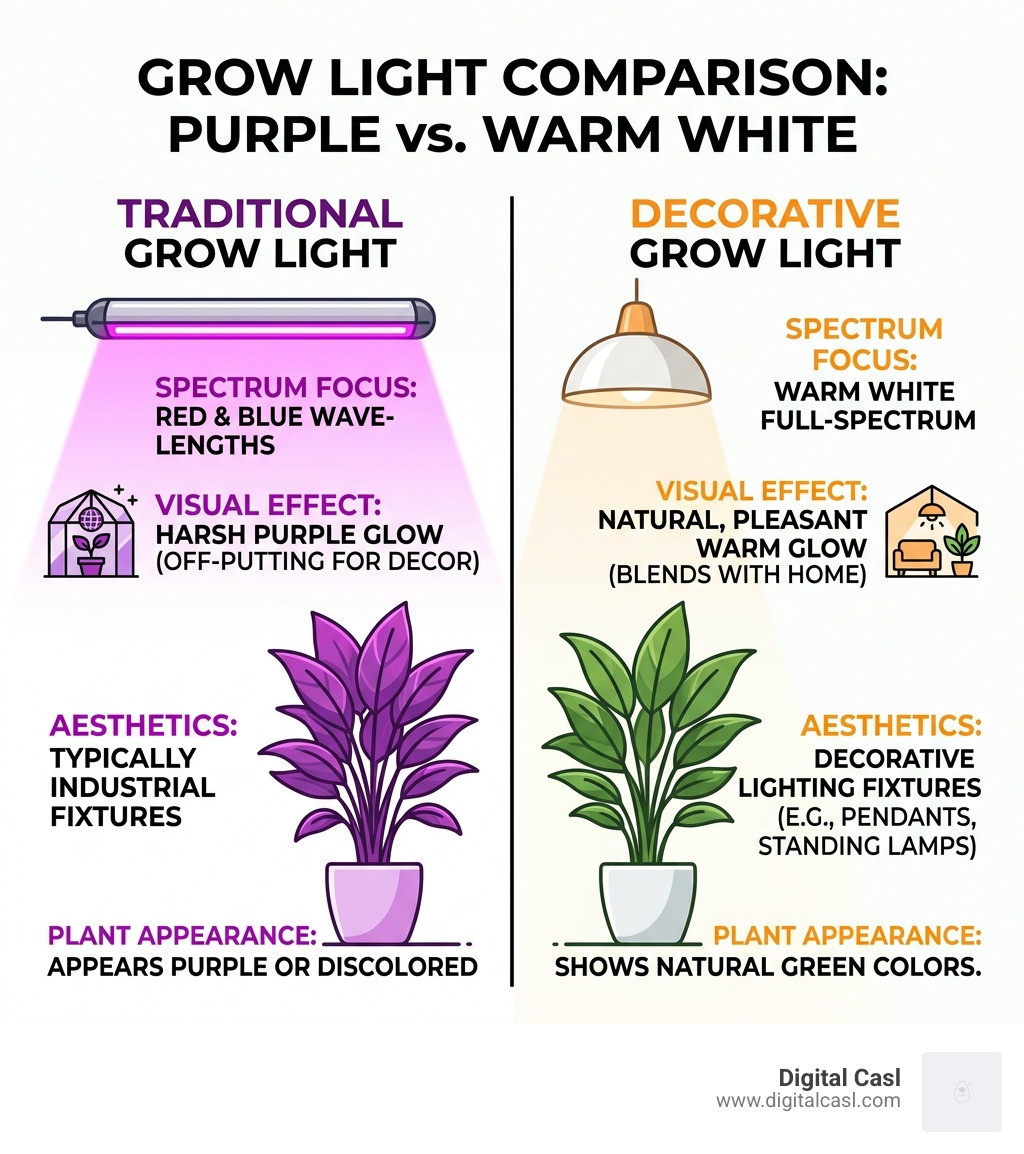
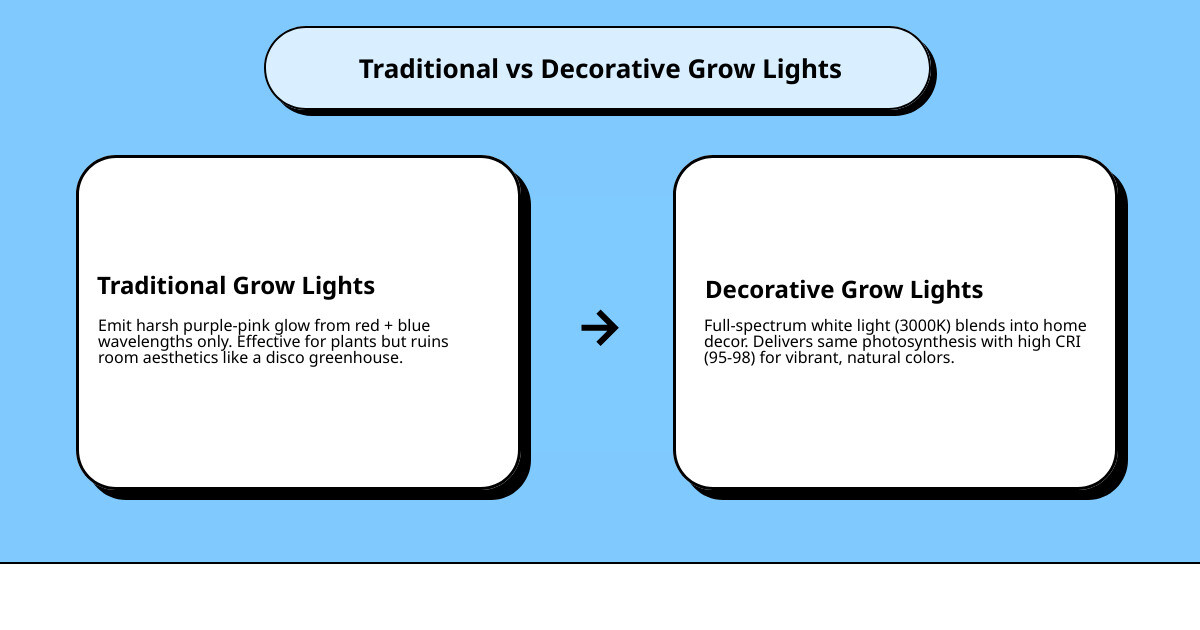
Most decorative grow lights use full-spectrum LEDs with a warm color temperature (around 3000K) that looks like normal home lighting — not the harsh pink-purple glow of traditional grow lights.
Here’s the thing most plant parents run into: you finally nail your indoor jungle aesthetic, then ruin it with a glaring pink light that makes your living room look like a disco greenhouse.
Traditional grow lights focus only on the red and blue wavelengths plants absorb most efficiently. That combination creates the signature purple glow — effective for plants, terrible for your vibe.
Modern decorative grow lights solve this. They deliver the same photosynthetic performance using full-spectrum white light that blends naturally into your space. As one horticulture expert put it, think of grow lights as a way to “finish” the light your home can’t quite provide on its own.
The result? Plants that thrive, and a room that still looks like a room.
Defining the Aesthetic: What Makes a Grow Light Decorative?
In the past, “grow light” was synonymous with “industrial fixture.” In April 2026, the trend has shifted toward biophilic design—the practice of connecting our indoor living spaces with the natural world. To do this successfully, our tools need to match our decor.
A decorative grow light for indoor plants is defined by several key aesthetic and technical features:
- Form Factor: Instead of bulky panels, these lights take the shape of high-end furniture. Think minimalist profiles, architectural curves, and sculptural designs that look like they belong in a gallery.
- Full-Spectrum White Light: The most critical difference is the color. Decorative lights use a “sunset spectrum” or warm white light. This provides the blue and red wavelengths plants need but masks them within a spectrum that is pleasing to the human eye.
- High Color Rendering Index (CRI): Decorative lights often boast a CRI of 95 to 98. This means they render colors almost exactly like natural sunlight. Your plants look vibrant and “true to life,” rather than washed out or tinted.
- Premium Materials: You won’t find cheap, flimsy plastic here. We look for solid woods like Light Alder or Espresso Wenge, brushed metals, and premium braided cables.
- Wellness-Focused Lighting: These fixtures often pull double duty as ambient lighting, creating a soothing glow (around 3000K) that reduces stress and enhances the mood of a room.
Top Types of Decorative Grow Lights for Indoor Plants
Choosing the right light depends entirely on your “interior scaping” goals. Are you trying to save a Fiddle Leaf Fig in a dark corner, or are you showcasing a collection of rare succulents on a bookshelf?
LED technology and Efficiency
Modern decorative options almost exclusively use LED technology. Specifically, many high-end models now use COB (Chip on Board) LEDs. This is a game-changer for home decor because COB LEDs are incredibly efficient—a 40W COB light can often deliver the same photosynthetic punch as a 200W traditional bulb, but with 80% less heat and power consumption.
Space-Saving and Versatile Solutions
For those of us living in apartments or smaller homes, space is at a premium.
- Pendant Lights: These are the ultimate space-savers. By hanging the light from the ceiling, you free up floor and shelf space while creating a dramatic focal point.
- Standing Towers: These are perfect for “impossible spaces” like windowless corners. They allow you to stack plants vertically, providing light to every level of your collection.
- Integrated Planters: Products like large round LED planters or medium-sized variants combine the pot, the light, and often a self-watering system into one seamless unit.
Essential Features in Decorative Grow Lights for Indoor Plants
When you move away from the “janky” budget options, you start to see features that make plant parenting much easier:
- In-line Dimming: Not all plants want 100% intensity all the time. Being able to dim the light from 10% to 100% allows you to mimic the natural changes in sunlight and set the evening mood.
- Auto-Timers: Most high-end decorative lights feature built-in 4H, 8H, or 12H cycles. This ensures your plants get consistent “daylight” even when you’re on vacation.
- Remote and App Control: Technology like RF (radio frequency) remotes or smartphone apps allow you to adjust height (on motorized models), brightness, and color temperature from across the room.
- Heat Dissipation: A decorative light shouldn’t double as a space heater. Advanced engineering ensures these lights stay cool to the touch, protecting both your delicate foliage and your curious pets.
- Longevity: Look for lights rated for 30,000 to 100,000 hours. A light rated for 100,000 hours could last over 20 years with typical daily use!
Optimal Placement for Decorative Grow Lights for Indoor Plants
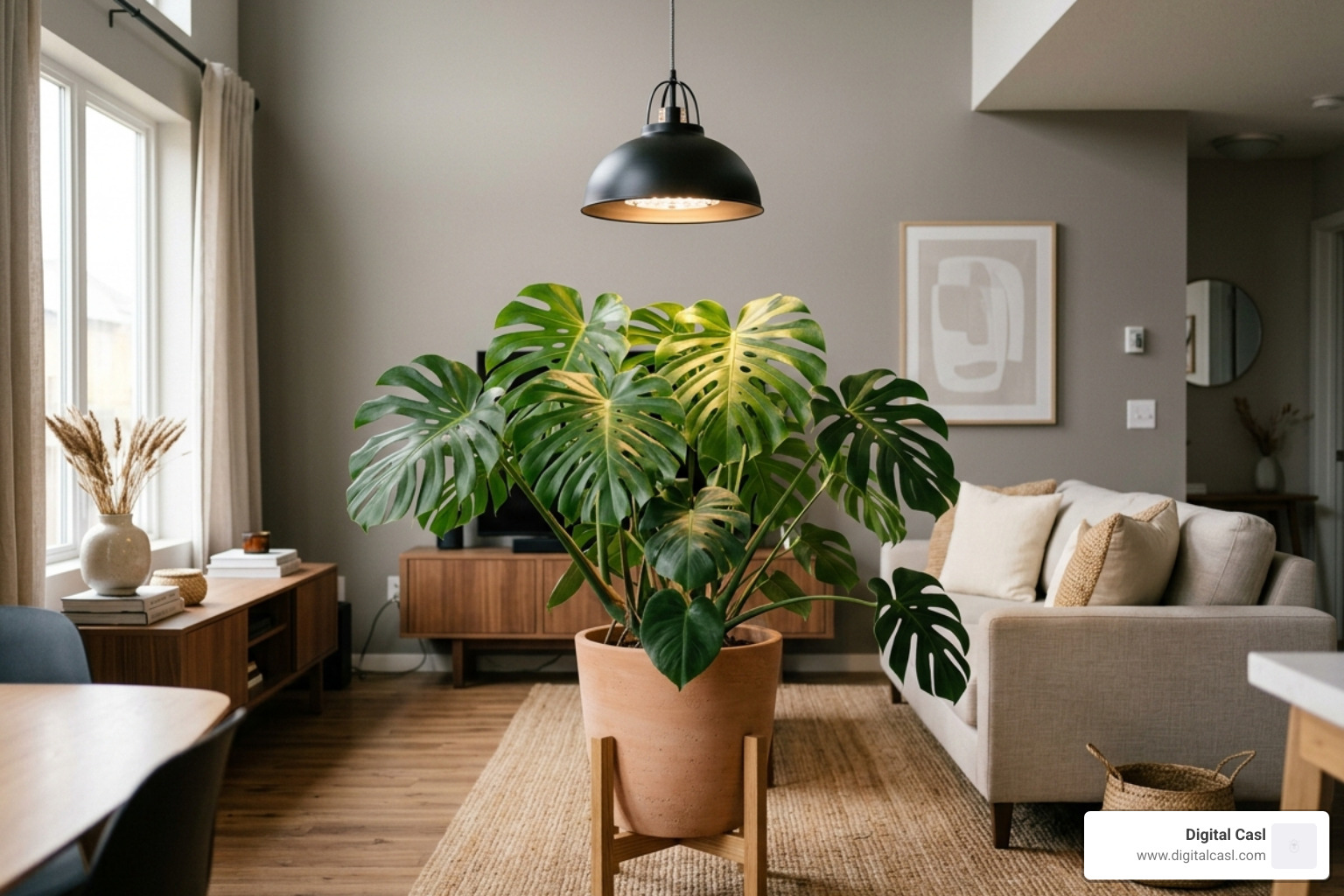
Placement is where the science meets the art. If the light is too far, your plant becomes “leggy” (reaching for the light). If it’s too close, you risk leaf bleaching or heat damage.
- The 12-24 Inch Rule: For most high-quality decorative grow lights for indoor plants, 12 to 24 inches is the “sweet spot” for moderate-light plants like Monsteras or Philodendrons.
- Light-Hungry Plants: Succulents, cacti, and herbs generally need to be closer—between 6 and 12 inches from the light source.
- Low-Light Tolerant Plants: Pothos, Snake Plants, and ZZ plants can sit further away, often up to 3 or 4 feet, and still benefit from the supplemental “glow.”
- Measuring Success: While you can use a light meter to measure foot-candles (aiming for 200-400 FC for most tropicals), a simple “hand test” works too. If you hold your hand where the leaves are and it feels uncomfortably warm after 30 seconds, the light is too close.
Performance vs. Style: Can Pretty Lights Actually Grow Plants?
This is the million-dollar question. Does “aesthetic” mean “weak”? The answer is a resounding no, provided you look at the right specs. When evaluating a light, ignore “equivalent wattage” and look for:
- Photosynthetic Photon Flux (PPF): This measures the total amount of light a fixture produces that plants can actually use for photosynthesis.
- Photosynthetically Active Radiation (PAR): This is the range of light (400–700nm) that triggers growth. A high-quality decorative light is specifically engineered to emit light within this exact range.
- Color Temperature:
- 6500K (Cooler): Great for leafy, vegetative growth and strong stems.
- 3000K (Warmer): Encourages flowering, fruiting, and bushier growth.
- Many premium towers allow you to toggle between these temperatures depending on what your plant needs that season.
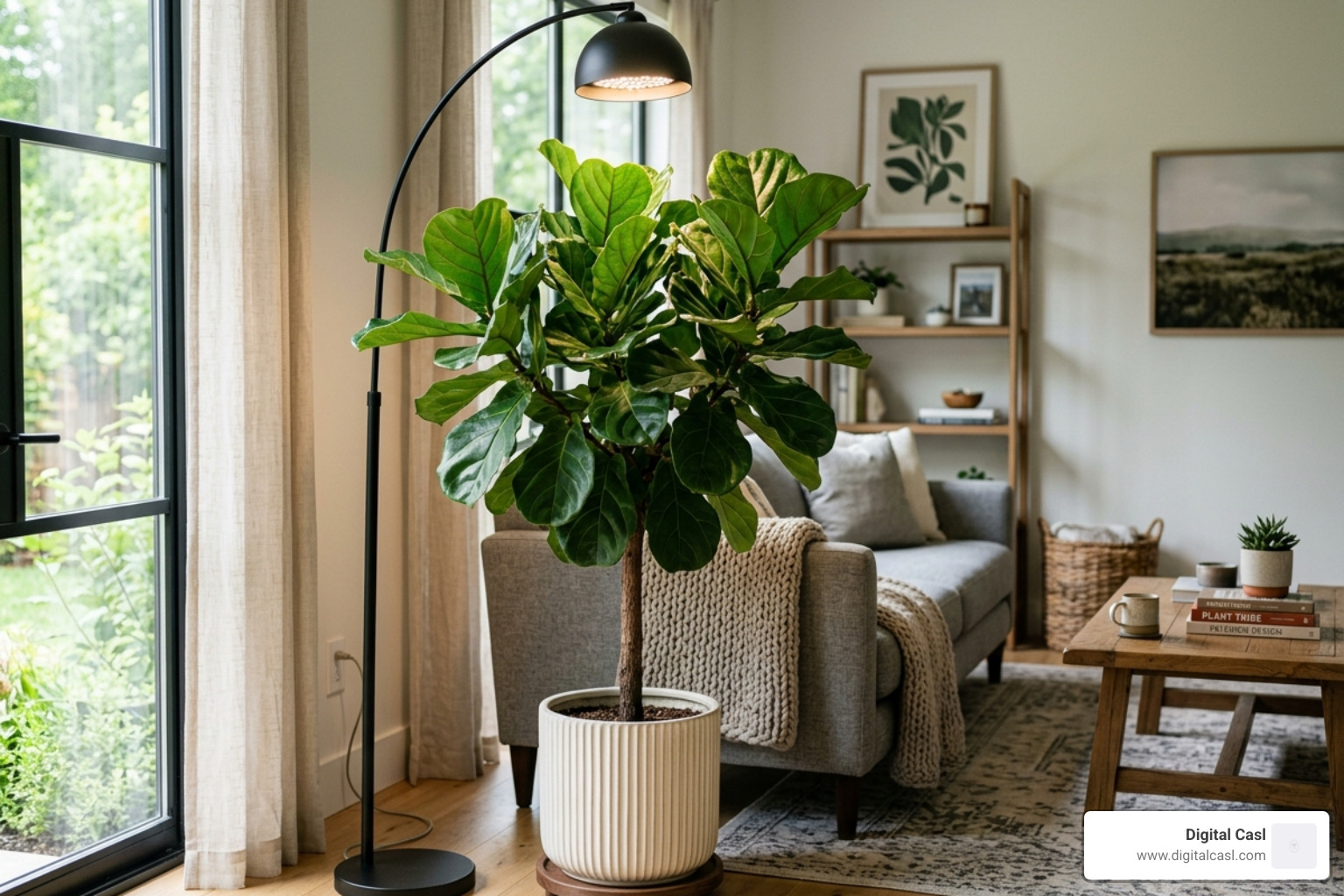
In the battle of 40W COB vs. 200W traditional LED, the COB often wins on efficiency. It directs light more precisely and wastes less energy as heat. This means you can have a sleek, thin lamp that performs just as well as a giant industrial panel.
Frequently Asked Questions About Aesthetic Plant Lighting
Can any LED bulb be used as a decorative grow light?
Technically, a plant will get something from a standard hardware store LED, but it’s like trying to live off snacks instead of meals. Standard household LEDs are designed for human visibility, often lacking the specific blue and red peaks required for efficient photosynthesis. Specialized horticultural LEDs are “tuned” to provide the exact wavelengths plants need to thrive, not just survive.
How long should I leave my decorative grow lights on?
Plants, like humans, have circadian rhythms and need a “rest” period. We recommend 8 to 12 hours of light per day. If your room gets some natural light, you might only need the grow light for 5 or 6 hours in the evening to “finish” the day. Most decorative lights come with timers to make this automation effortless.
Do decorative grow lights produce a lot of heat?
High-quality LED decorative lights are remarkably cool. Because they are so efficient at converting electricity into light rather than heat, they usually feature “cool-touch” surfaces. This makes them much safer for homes with children or pets and prevents the “leaf burn” common with old-fashioned incandescent or fluorescent bulbs.
Conclusion
At Digital Casl, we believe in low-maintenance green solutions delivering high-maintenance joy. You shouldn’t have to choose between a healthy indoor jungle and a beautiful home. By investing in decorative grow lights for indoor plants, you are choosing a sustainable, long-term solution that treats your plants like the living art they are.
Whether you’re looking for an ambient grow light to brighten a dark bedroom corner or an adjustable tower to support your 7-foot Bird of Paradise, the future of plant care is bright, warm, and—most importantly—beautiful.
Ready to transform your space? Level up your plant care with Digital Casl for more tips on making your indoor garden thrive.
