
Your Home’s Air Could Be Dirtier Than You Think — Here’s the Safe Fix for Cat Owners
Air cleaning plants safe for cats are a real thing — and they work. Here’s a quick answer if you just need the list:
| Plant | Safe for Cats? | Key Toxin Removed |
|---|---|---|
| Spider Plant | Yes | Formaldehyde |
| Boston Fern | Yes | Formaldehyde, Xylene |
| Areca Palm | Yes | Benzene, Formaldehyde |
| Bamboo Palm | Yes | Benzene, Trichloroethylene |
| Money Tree | Yes | General VOCs |
| Prayer Plant | Yes | Multiple VOCs |
| Peperomia | Yes | Formaldehyde (up to 47%) |
Now, the bigger picture.
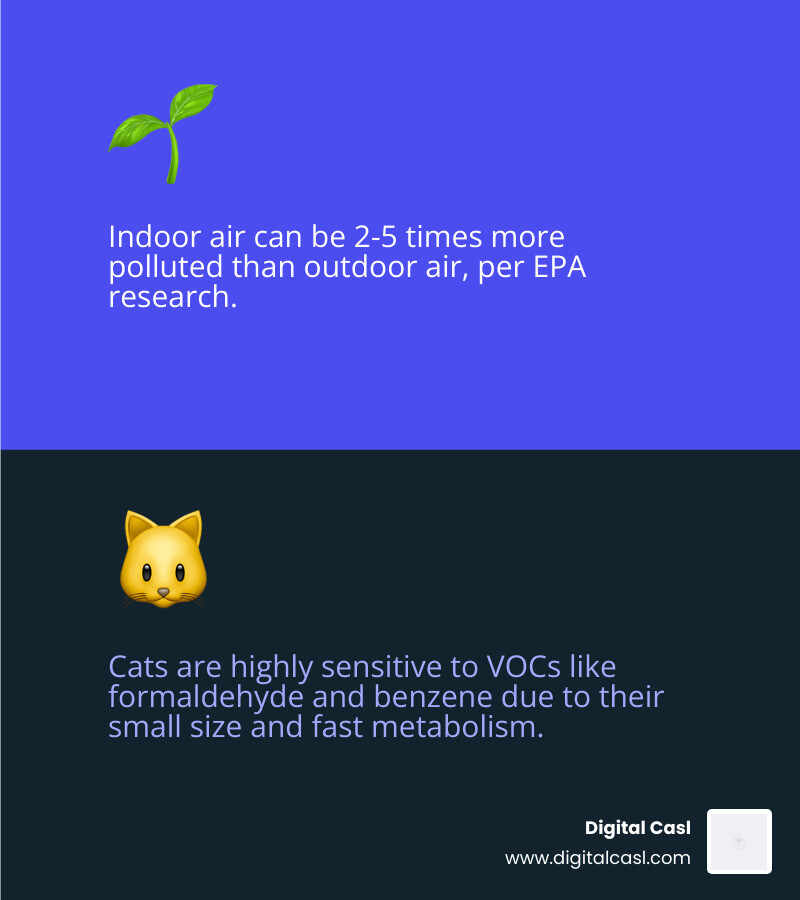
Indoor air can be 2 to 5 times more polluted than outdoor air, according to the EPA. That means the air inside your apartment — where your cat naps, plays, and breathes all day — may be full of invisible toxins like formaldehyde, benzene, and trichloroethylene. These come from everyday things: furniture, cleaning products, and building materials.
Plants can help. NASA research found that one well-placed plant can improve air quality by up to 40% in a small room. They pull contaminants down through water vapor into their roots, where the toxins are broken down.
But here’s the catch for cat owners: many of the most popular air-purifying plants are toxic to cats. Peace lilies, pothos, snake plants — they’re on almost every “best air purifier” list. They’re also on the ASPCA’s toxic plant list.
So the challenge isn’t just finding plants that clean air. It’s finding ones that won’t send your cat to the emergency vet if they decide to snack on a leaf.
That’s exactly what this list solves.
Why You Need Air Cleaning Plants Safe for Cats
We all love the “urban jungle” aesthetic, but in 2026, indoor gardening has become more than just a decor trend—it’s a health necessity. As we spend more time in sealed, energy-efficient apartments, the concentration of Volatile Organic Compounds (VOCs) has reached an all-time high. These invisible chemicals, like Formaldehyde (found in pressed wood and carpets), Benzene (found in plastics and detergents), and Trichloroethylene (found in cleaners), circulate in the air we and our cats breathe.
According to Scientific research on indoor air quality, these pollutants can lead to respiratory issues, headaches, and long-term health complications. For our feline friends, whose smaller bodies and faster metabolisms make them more sensitive to environmental toxins, the risk is even higher.
But it’s not all doom and gloom! Integrating air cleaning plants safe for cats into your home offers several “bonus” benefits:
- Humidity Control: Plants act as natural humidifiers. They release water vapor, which is a lifesaver for cats with dry skin or respiratory sensitivities during the winter months.
- Mood Enhancement: Research from the National Library of Medicine suggests that real foliage reduces stress and improves mental well-being for humans—and while Harvey the cat hasn’t given us a written testimonial yet, we suspect they enjoy the “jungle” vibes just as much as we do.
- Respiratory Health: By filtering out dust and particulate matter, these plants help keep feline (and human) lungs clear.
At Digital Casl, we believe you shouldn’t have to choose between a healthy home and a happy cat. Our mission is to provide low-maintenance green solutions that deliver high-maintenance joy without the vet bills.

Top 7 Air Cleaning Plants Safe for Cats
When selecting the best air cleaning plants safe for cats, we look for the “Goldilocks” zone: high toxin-removal efficiency and zero toxicity. We’ve cross-referenced the NASA Clean Air Study with Scientific research on plant toxicity to bring you the best of the best.
| Plant Name | Toxin Removal Efficiency | Light Requirements | Maintenance Level |
|---|---|---|---|
| Spider Plant | High (Formaldehyde) | Bright Indirect | Very Low |
| Boston Fern | Very High (Xylene) | Medium + Humidity | Moderate |
| Areca Palm | High (VOCs) | Bright Indirect | Moderate |
| Bamboo Palm | High (Benzene) | Medium to Low | Low |
| Money Tree | Moderate | Bright Indirect | Low |
| Prayer Plant | High (Multiple) | Medium | Low |
| Peperomia | High (Formaldehyde) | Low to Medium | Very Low |
Spider Plant: The Beginner-Friendly Air Cleaning Plant Safe for Cats
The Chlorophytum comosum, or Spider Plant, is the undisputed MVP for cat owners. It’s essentially the “Golden Retriever” of the plant world—friendly, resilient, and virtually impossible to kill.
NASA found that Spider Plants are incredible at scrubbing formaldehyde from the air. But for cat owners, there’s a fun (and slightly weird) twist: these plants are mildly hallucinogenic to cats. It’s like nature’s version of catnip. You might find your cat batting at the long, cascading leaves or trying to take a nibble for a little “buzz.” Because they are non-toxic, there’s no need to panic if they get a leaf or two, but we recommend hanging them in baskets to keep your plant from looking like a tattered salad bar.
Bamboo Palm: The Heavy-Duty Air Cleaning Plant Safe for Cats
If you want to feel like you’re living in a resort while simultaneously cleaning your air, the Chamaedorea seifrizii is your go-to. This “heavy-duty” purifier is rated near the top of the list for removing benzene and trichloroethylene—chemicals often found in new carpets and paints.
The Bamboo Palm can grow up to 12 feet tall, making it a fantastic floor plant that adds instant drama to a room. It handles indirect light beautifully, so it’s perfect for those corners of your apartment that don’t get direct sun. Just be warned: kittens love stringy things, and a palm frond looks a lot like a “mouse on a string” toy.
Peperomia: The Compact Air Cleaning Plant Safe for Cats
For those living in smaller spaces, the Peperomia obtusifolia (or Baby Rubber Plant) is a tiny powerhouse. NASA research indicates that Peperomia species can reduce indoor formaldehyde levels by a staggering 47%.
These plants have thick, succulent-like leaves that are much less tempting for cats to chew on than “grassy” plants. They are desktop-friendly, slow-growing, and thrive on a bit of neglect. If your cat, whom we’ll call “Felix,” does manage to take a bite, the piece can actually be used for propagation! It’s the ultimate low-maintenance solution for a busy cat parent.
Strategic Placement and Care for a Feline-Friendly Jungle
Even with non-toxic plants, you probably don’t want your cat using your expensive Boston Fern as a bed. Strategic placement is the key to a harmonious home.
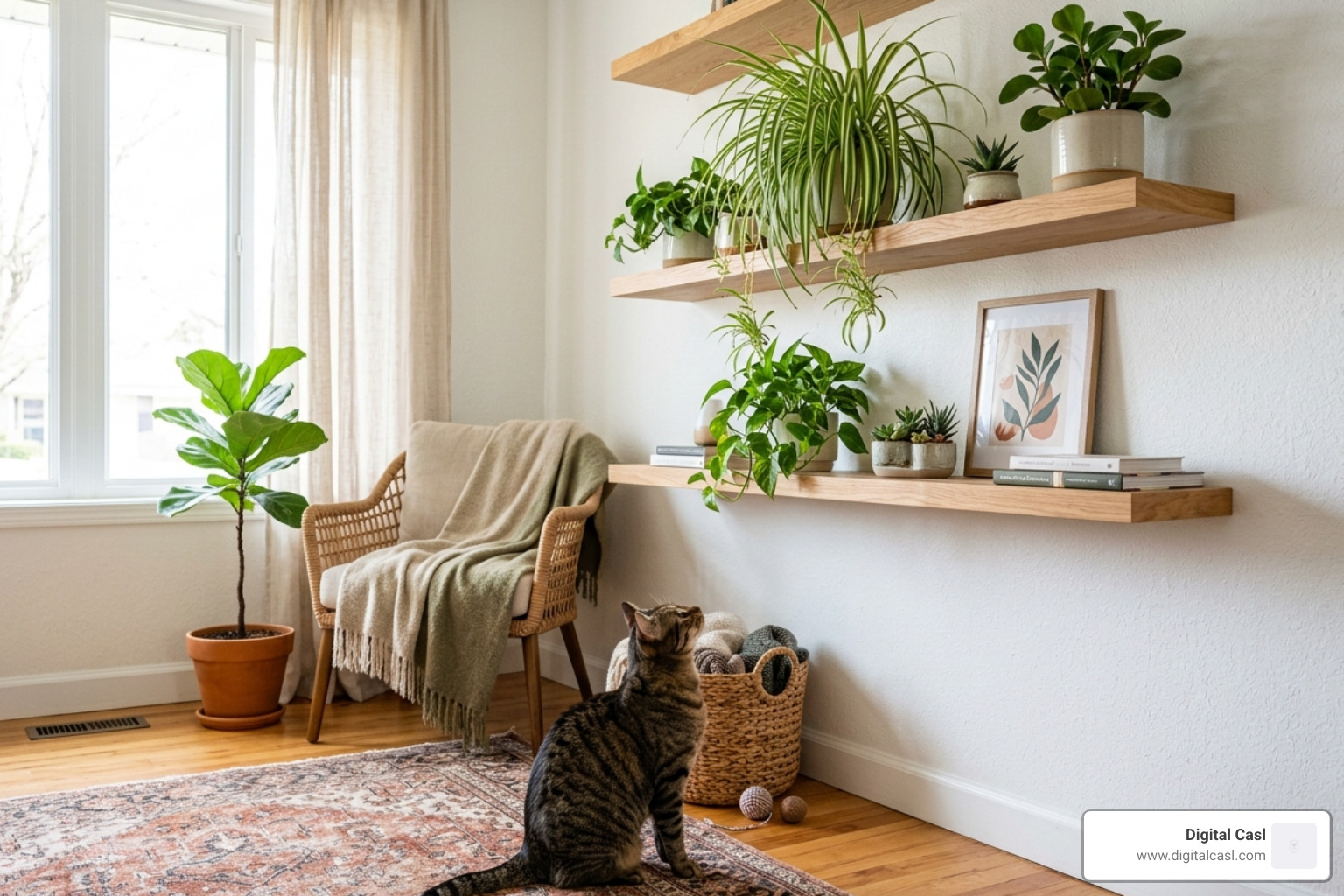
- Vertical Gardening: Use high floating shelves and wall-mounted planters. If the cat can’t reach it, the plant stays pristine, and the air stays clean.
- Hanging Planters: Spider plants and Hoyas look beautiful cascading from the ceiling. This keeps the “hallucinogenic” leaves out of reach while maximizing air filtration.
- Soil Protection: Does your cat think your plant pots are extra litter boxes? Cover the soil with large decorative stones or a layer of mulch. This discourages digging without hurting the plant.
- Citrus Deterrents: Most cats despise the smell of citrus. We often recommend spraying the base of your planters with lemon peel water. It’s a natural, safe way to say “keep off.”
- The “Cat Grass” Diversion: Sometimes the best defense is a good offense. Provide your cat with their own “legal” greens, like wheatgrass or catnip, in a designated area. They’ll be less likely to eye your Prayer Plant if they have their own salad bar.
Maintenance Tip: To keep your plants functioning at peak air-purifying capacity, you must dust the leaves! A layer of dust blocks the stomata (the plant’s breathing pores), making them less efficient at filtering toxins. A quick wipe with a damp cloth once a week does wonders.
Toxic Traps: Popular Air Purifiers to Avoid
This is the part of the guide where we have to be the “buzzkill,” but it’s for a good cause. Many plants marketed as “top air purifiers” are incredibly dangerous for felines. If you have these in your home, they need to be moved to a room the cat cannot access, or rehomed entirely.
- Snake Plant (Sansevieria): Often called “Mother-in-Law’s Tongue,” this is a powerhouse purifier, but it contains saponins that cause nausea, vomiting, and diarrhea in cats.
- Peace Lily (Spathiphyllum): These are particularly dangerous. They contain calcium oxalate crystals that cause intense burning of the mouth and throat. Note: They are toxic to cats, while being slightly less harmful (though still not “safe”) for dogs.
- Pothos (Devil’s Ivy): It’s everywhere because it’s so easy to grow, but it’s “plant kryptonite” for cats.
- Aloe Vera: Great for your sunburn, terrible for your cat’s digestion.
- Sago Palm: This is the big one. Every part of this plant is highly toxic. Ingestion can lead to liver failure and death.
Signs of Ingestion/Poisoning: If you suspect your cat has eaten a toxic plant, watch for:
- Excessive drooling or pawing at the mouth.
- Vomiting or diarrhea.
- Lethargy or weakness.
- Difficulty breathing.
Emergency Protocol: Immediately contact your veterinarian or the ASPCA Animal Poison Control Center at (888) 426-4435. Even if the plant is “safe,” a large amount of any foliage can cause a mild stomach upset.
Frequently Asked Questions about Cat-Safe Plants
How many plants are needed to clean a 2026 apartment?
NASA’s original recommendation was one plant for every 100 square feet of space. However, in a modern apartment with 2026 air standards, we suggest grouping plants together. This creates a “micro-environment” that boosts humidity and filtration capacity. For a standard 800-square-foot apartment, having 8 to 10 well-sized plants (like a mix of Areca Palms and Spider Plants) will provide a noticeable improvement in air freshness.
What should I do if my cat eats a non-toxic plant?
First, don’t panic! If the plant is on our safe list, your cat is not in danger of poisoning. However, cats are obligate carnivores, and their stomachs aren’t designed to process large amounts of fiber. They may experience some mild stomach upset or vomiting simply because they ate something “green.” Monitor their behavior, ensure they stay hydrated, and perhaps move that plant to a higher shelf.
Can these plants survive in low-light rooms?
Absolutely. The Cast Iron Plant (Aspidistra elatior) earned its name because it’s nearly indestructible—it survived in coal-heated Victorian homes with almost no light. The Parlor Palm is another great option for dim corners. While they might grow more slowly in low light, their photosynthesis and toxin-removal processes still function, keeping your air clean.
Conclusion
Creating a lush, green sanctuary doesn’t have to be a source of stress for pet owners. By choosing air cleaning plants safe for cats, you’re taking a proactive step toward a healthier lifestyle for every member of your family—feline and human alike.
At Digital Casl, we’re all about those low-maintenance green solutions that deliver high-maintenance joy. Whether you’re starting with a single Spider Plant or building a full-scale indoor jungle, a little planning goes a long way. Keep your leaves dusted, your toxic plants out of the house, and your cat’s “legal” grass stash full.
Clean air and a happy cat? That’s a breath of fresh air we can all get behind. Start your cat-safe garden today and join the thousands of urban gardeners who have stopped the hissing and started the cleaning!
