
Clonex or Powder? Finding the Best Plant Rooting Hormone
Why Finding the Best Plant Rooting Hormone Makes or Breaks Your Propagation
The best plant rooting hormone for most home growers depends on your plant type and how much time you want to spend — but here’s a quick answer:
| Format | Best For | Top Pick |
|---|---|---|
| Gel | Cannabis, fast cloning | Clonex Rooting Gel |
| Powder | Houseplants, trees, succulents | Hormex Rooting Powder |
| Liquid | Bulk propagation, hydroponics | Dip ‘N Grow |
| DIY/Natural | Organic, edible plants | Willow Water |
You’ve got a cutting. You stick it in soil. You wait. And then… nothing.
It’s one of the most frustrating experiences for plant lovers — especially when you’re already short on time and just want your plants to thrive with minimal fuss.
The good news? A rooting hormone can change that completely.
Rooting hormones work by giving cuttings a boost of auxin — the natural signal plants use to grow roots. Over 80% of professional commercial growers use propagation techniques to scale their plants. And with the right product, even beginners can see visible roots in as little as 1 to 2 weeks.
The tricky part is knowing which product to pick. Gels, powders, liquids, and even DIY kitchen options all work differently — and the wrong choice can mean wasted cuttings and wasted time.
This guide cuts through the noise so you can clone your plants with confidence.
Science of Success: How the Best Plant Rooting Hormone Works
To understand why we use these products, we have to look at what’s happening inside the stem. When we take a cutting, we are essentially asking the plant to perform a biological miracle: turning stem cells into root cells.
In nature, plants produce a class of hormones called auxins. These are concentrated in the tips of roots and shoots. When you snip a branch, the plant tries to send its own auxins to the “wound” to start the healing and rooting process. However, many plants don’t produce enough auxin quickly enough to prevent the cutting from drying out or rotting.
That is where the best plant rooting hormone comes in. Most commercial products use synthetic auxins, primarily Indole-3-butyric acid (IBA) and sometimes Naphthaleneacetic acid (NAA).
How it Happens at the Cellular Level
When you apply IBA to a fresh cut, it interacts with the vascular cambium—the layer of tissue responsible for growth. The hormone triggers cell differentiation, essentially “reprogramming” the stem cells to become root initials.
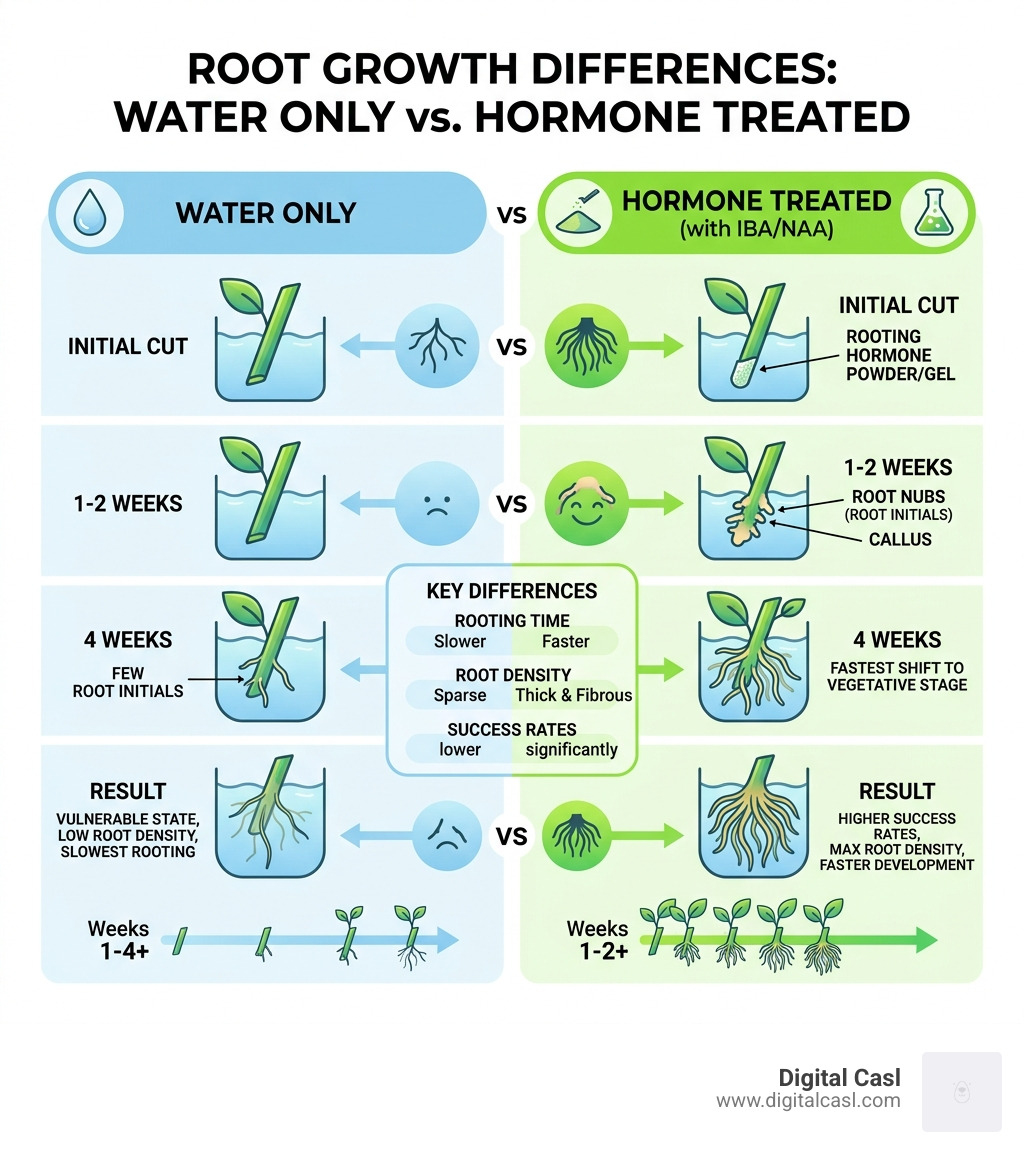
Without this boost, a cutting might sit in a glass of water for a month before showing a single white nub. With a high-quality hormone, the plant shifts into the vegetative stage much faster. This speed is vital because the faster a cutting roots, the less time it spends vulnerable to pathogens and environmental stress.

Why IBA is the Best Plant Rooting Hormone for Success Rates
While there are several types of synthetic auxins, IBA is widely considered the gold standard in 2026. Why? Because it is remarkably stable and stays at the site of the cut longer than natural auxins.
- Success Rates: Professional studies have shown that using a concentrated IBA formula can increase rooting success by up to 60% compared to plain water.
- Root Density: It’s not just about if it roots, but how it roots. IBA promotes a thicker, more fibrous root system. This allows the new plant to take up nutrients and water more efficiently once it’s transplanted.
- Versatility: Whether you are working with a delicate African Violet or a stubborn Oak branch, there is an IBA concentration designed for that specific resistance level.
For those dealing with moderately difficult plants, using a specialized product like Hormex Rooting Powder #8 (0.8 IBA) – Rooting Hormone provides the exact concentration needed to trigger those stubborn cells into action.
Proper Application for Maximum Growth
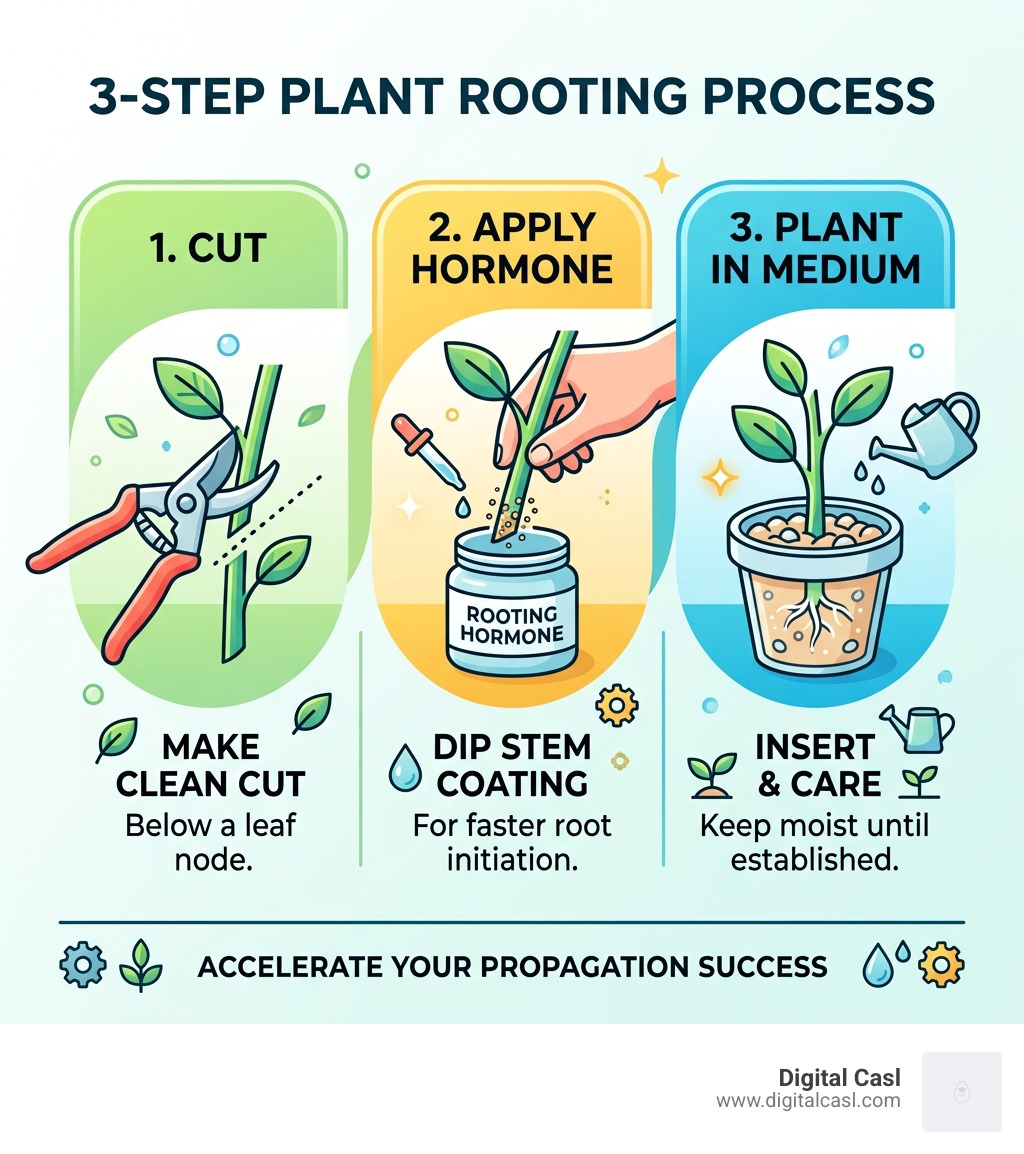
Even the best plant rooting hormone won’t work if it’s applied incorrectly. We’ve seen many growers make the mistake of just “dipping and hoping,” but a little precision goes a long way.
- The 45-Degree Angle: Always use a sterilized, sharp blade to make your cut at a 45-degree angle. This increases the surface area for the hormone to penetrate the vascular cambium.
- Node Trimming: Roots most often emerge from “nodes”—the spots where leaves emerge. Make your cut just below a node and remove the bottom leaves so the plant can focus its energy downward.
- Contamination Prevention: This is huge! Never dip your cutting directly into the original container. If one cutting has a fungus, you’ve just ruined your entire bottle of hormone. Pour a small amount into a separate shot glass or cap, and discard any leftover.
- The Right Medium: Use a “soilless” mix like perlite, vermiculite, or peat moss. These provide the perfect balance of oxygen and moisture.
- Humidity Domes: Cuttings have no roots to drink water, so they must “breathe” moisture through their leaves. Using a humidity dome or a simple plastic bag keeps the air moist while the roots form.
Comparing Formats: Powder vs. Gel vs. Liquid
In our experience at Digital Casl, we’ve found that the “best” format is often a matter of the specific environment you’re growing in. In 2026, the market is split into three main textures: powders, gels, and liquids.
| Feature | Rooting Powder | Rooting Gel | Liquid Concentrate |
|---|---|---|---|
| Shelf Life | Very Long (Years) | Moderate | Moderate |
| Adhesion | Good (if moistened) | Superior | Low |
| Contamination Risk | Low (if used correctly) | Moderate | Low |
| Best For | Houseplants, Succulents | Cannabis, Hydroponics | Bulk, Trees, Nursery Use |
| Sanitization | Dry formula | Often contains preservatives | Often self-sanitizing (alcohol) |
Advantages of Rooting Powders
Powders are the old-school favorite for a reason. They are incredibly stable and have a minimalist formula that doesn’t require many preservatives.
- Stability: Unlike liquids, powders don’t degrade quickly when exposed to temperature changes.
- Callusing: For succulents and cacti, powders are excellent because they don’t add excess moisture to the wound, which helps the “callusing” process that prevents rot.
- Custom Strengths: Brands like Hormex offer different levels (like #1, #3, #8, and #16) so you can match the IBA strength to the “hardness” of the wood.
When to Use Liquid Concentrates
Liquid rooting hormones are the choice of professionals who need to process hundreds of cuttings at once.
- Custom Dilution: You can mix a liquid concentrate to be very weak for soft herbs or very strong for hardwood tree cuttings.
- Self-Sanitizing: Many liquids, such as Dip ‘N Grow, use an alcohol solvent. This makes the solution self-sanitizing, which helps prevent the spread of pathogens during the “dip” process.
- Absorption: Because the hormone is dissolved in liquid, it can sometimes penetrate the stem more deeply than a powder that sits on the surface.
If you’re looking for the ultimate versatility, we often recommend the Hormex Rooting Duo: Liquid Hormone & Rooting Powder #8. This combo allows you to use the liquid for general plant health and the powder for specific, tougher propagation projects.
The Rise of Rooting Gels
Gels like Clonex have become the industry standard for high-value crops like cannabis. The gel is designed to “seal” the cut instantly, preventing air bubbles (embolisms) from entering the stem and killing the cutting. It stays on the stem even when placed in aeroponic or hydroponic systems where a powder might wash off.
Top-Rated Solutions for Every Plant Type
Not all plants are created equal. A “one-size-fits-all” approach is one of the biggest reasons propagation fails.
Selecting the Best Plant Rooting Hormone for Hardwood Cuttings
If you’re trying to clone a Birch, Maple, or Oak tree, you’re dealing with hardwood. These plants have dense, protective layers that are hard for hormones to penetrate.
In 2026, professional standards dictate using a high-concentration IBA powder. For example, Hormex #16 contains 1.6% IBA—the highest concentration available for consumer use. This “heavy hitter” is designed specifically for those difficult-to-root species that would normally take months to show progress.
Best for Cannabis and High-Value Clones
For cannabis cultivators, success rates need to be as close to 100% as possible. Products like Clonex Rooting Gel or Rootech are the go-to choices here. These gels contain a complex blend of vitamins and minerals alongside IBA to ensure the clone has everything it needs to survive the first 10 days of its life.
Best for Houseplants and Succulents
For your average Monstera, Pothos, or Echeveria, you don’t need a massive dose of hormones. A standard strength powder like Garden Safe TakeRoot or Hormex #1 is perfect. These are cost-effective and provide just enough of a “nudge” to get roots moving without the risk of “burning” the delicate soft tissue of the stem.
Natural and DIY Alternatives for Organic Growers
We know many of our Digital Casl readers prefer to keep things organic, especially for edible herbs and fruit trees. While synthetic hormones are generally safe when used correctly, there are several “kitchen cabinet” solutions that work surprisingly well.
- Willow Water: This is the “OG” of rooting hormones. Willow trees are packed with natural IBA and salicylic acid (the stuff in aspirin). By soaking chopped willow twigs in boiling water for 24 hours, you create a “tea” that can boost rooting success rates up to 90%.
- Honey: While honey doesn’t actually contain rooting hormones, it is a powerful natural antiseptic and antifungal. Dipping a cutting in honey protects the wound from bacteria, giving the plant’s natural auxins time to work.
- Cinnamon: Similar to honey, cinnamon is a natural fungicide. It’s great for preventing “damping off” (a fungal disease that kills young cuttings).
- Apple Cider Vinegar: A very dilute solution (about a teaspoon per liter of water) can provide a slight acidic boost that some plants love, though be careful—too much will kill the cutting!
Frequently Asked Questions about Rooting Hormones
How long does it take for cuttings to root with hormones?
This is the most common question we get! While it varies by species, here is a general 2026 timeline for success:
- Softwood (Herbs, Coleus): 5 to 10 days.
- Semi-Hardwood (Houseplants, Azaleas): 2 to 3 weeks.
- Hardwood (Trees, Shrubs): 4 to 6 weeks. With the best plant rooting hormone, you should see “root nubs” or white callusing significantly faster than you would with plain water.
Can I use rooting hormones on edible plants?
Yes, but you should check the label. Most professional-grade powders like Hormex are free of dyes and preservatives, making them safe for fruits and vegetables. However, some gels contain synthetic dyes or alcohol-based solvents that some organic gardeners avoid. If you are worried, stick to willow water or a clean, minimalist powder.
What are the most common propagation mistakes?
We’ve seen it all! The top three mistakes are:
- Over-saturation: Keeping the medium sopping wet. This drowns the new roots (which need oxygen) and leads to rot.
- Incorrect IBA Strength: Using a hardwood strength (#16) on a delicate flower can “burn” the tissue. Always match the strength to the plant.
- Direct Dipping: As mentioned before, this is the fastest way to spread disease through your entire plant collection.
Do I need to refrigerate my rooting hormone?
For powders, no. Just keep them in a cool, dry place. For gels and some liquid concentrates, refrigeration can actually extend the shelf life and keep the active IBA from breaking down over time.
Conclusion
At Digital Casl, we believe that gardening should be about joy, not stress. Propagation is one of the most rewarding parts of being a plant parent—it’s essentially “free plants” for life!
Choosing the best plant rooting hormone is the “low-maintenance” secret to achieving those “high-maintenance” results. Whether you opt for the professional precision of a Hormex powder, the clinging power of a gel, or the organic simplicity of willow water, you are giving your plants the best possible start.
As we move through 2026, the technology behind these products continues to make it easier for anyone to grow a lush, green sanctuary at home. So, grab your shears, find a healthy mother plant, and start cloning!
For more sustainable gardening advice and more low-maintenance plant tips, stay tuned to our latest guides. We’re rooting for you!
