
Effective Ivy Plant Pest Control Tips
Identifying Common Pests and Damage Symptoms
To master ivy plant pest control, you first need to know your enemy. While ivy is a vigorous grower, it attracts a specific “fan club” of sap-sucking insects that can drain its vitality. According to experts at The American Ivy Society, Inc., keeping your plants healthy is your first line of defense, but even the healthiest ivy can fall victim to these common invaders.
Spider Mites These are perhaps the most notorious ivy villains. They thrive in the hot, dry air often found in homes during the winter. You’ll likely see fine, silken webbing between leaves before you see the mites themselves, which look like tiny moving dust motes.
Aphids These small, pear-shaped insects (often green or black on ivy) congregate on new growth. They excrete a sticky substance called honeydew, which can lead to the growth of sooty mold—a black, charcoal-like fungus that blocks sunlight from the leaves.
Mealybugs If it looks like your ivy has tiny bits of cotton stuck in the “armpits” (the leaf junctions), you’re dealing with mealybugs. They hide in these white cottony nests to protect their eggs, making them particularly tricky to eliminate.
Scale Insects Scale look less like bugs and more like small, prehistoric bumps or waxy shells attached to stems and leaf veins. They are immobile as adults, camouflaging themselves perfectly against the plant’s bark.
Whiteflies These look like tiny white moths. If you brush against your ivy and a cloud of white “dust” flies up, you have an infestation. Like aphids, they produce honeydew and cause leaf yellowing.
Fungus Gnats While they don’t eat the leaves, these tiny flies live in the soil. Their larvae can nibble on delicate ivy roots if the population gets too high, usually due to overwatering.
Visual Cues for Ivy Plant Pest Control Identification
Identifying the pest early depends on spotting the specific type of damage they leave behind. Use this table to help distinguish between the two most common culprits:
| Symptom | Spider Mites | Aphids |
|---|---|---|
| Leaf Color | Fine yellow stippling (tiny dots) | General yellowing and curling |
| Texture | Gritty or dusty feel on leaf undersides | Sticky “honeydew” coating |
| Growth | Bronzing of leaves and leaf drop | Stunted, twisted new growth |
| Visible Signs | Fine silken webbing | Visible clusters of insects on tips |
Distinguishing Between Pests and Diseases
Sometimes, what looks like a pest problem is actually a disease. Bacterial leaf spot (Xanthomonas campestris pv. hederae) is a common issue for Hedera helix. Unlike the random yellowing caused by mites, bacterial leaf spot creates irregular, water-soaked spots that often have a distinct chlorotic halo (a yellow ring).
According to research on English Ivy Disease Identification, the infection cycle is rapid; symptoms can appear within just 14 days of infection. If you see spots that look “oily” when held up to the light, or if the centers of the spots become papery and fall out (the “shotgun” effect), you are likely dealing with a pathogen rather than an insect.
Non-Chemical Ivy Plant Pest Control Methods
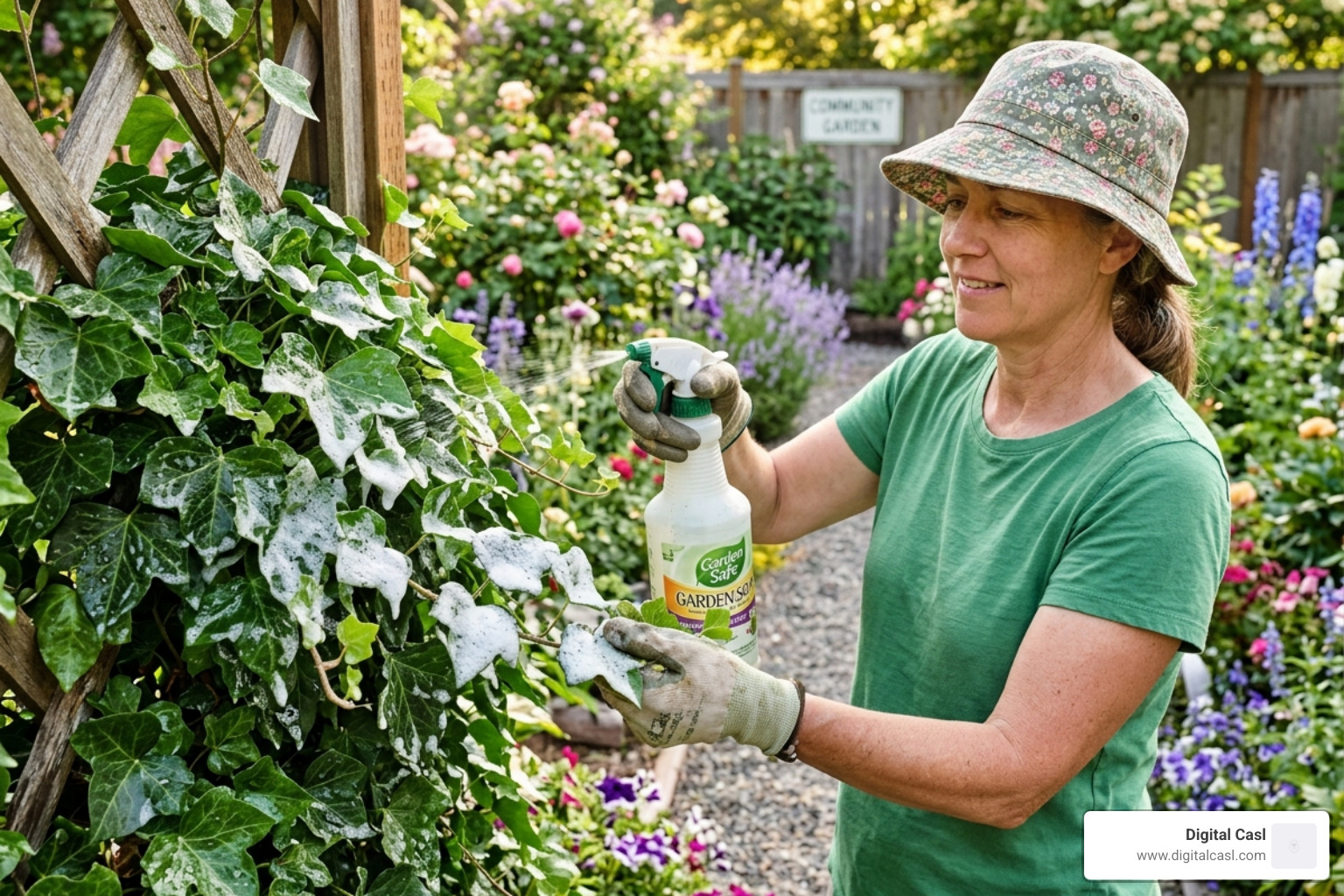
At Digital Casl, we love a “green” solution that doesn’t involve heavy chemicals. For indoor ivy, mechanical and physical removal is often all you need if you catch the problem early.
Mechanical Removal and Cold Water Showers For aphids and spider mites, a strong blast of cold water in the shower or with a garden hose can physically knock the pests off the plant. Make sure to hit the undersides of the leaves, as that’s where they love to hide.
Soapy Water Baths For a more thorough cleaning, give your potted ivy a “bath.” Mix a few teaspoons of mild liquid dish soap into a gallon of water. You can dip the entire foliage head into the sudsy water (hold the soil in place with your hands or a plastic wrap) or wipe the leaves down. For spider mites, we recommend a soapy bath every three to five days for at least five treatments to break their life cycle.
Rubbing Alcohol Swabs Mealybugs and scale are protected by waxy coatings that water won’t penetrate. Dip a cotton swab in 70% isopropyl rubbing alcohol and dab it directly onto the pests. The alcohol dissolves their protective “shell” and kills them instantly.
Pruning and Hygiene Don’t be afraid to snip off heavily infested vines. Ivy is incredibly resilient and will grow back quickly. Always remove dead leaves and debris from the top of the soil, as these provide the perfect hiding spots for pests to lay eggs.
Beneficial Insects If you have a large indoor garden or a greenhouse, you can enlist help. Ladybugs are voracious aphid hunters, while beneficial nematodes can be added to the soil to eliminate fungus gnat larvae.
Cultural Practices to Eliminate Infestations
Prevention is the best form of ivy plant pest control. Pests are opportunistic; they attack stressed plants.
- Air Circulation: Don’t crowd your ivy. Good airflow prevents the stagnant, humid conditions that mealybugs and whiteflies love.
- Humidity Management: Since spider mites hate moisture, misting your ivy or using a humidifier during dry winter months can keep them at bay.
- Soil Moisture: Let the top inch of soil dry out before watering again. This is the #1 way to prevent fungus gnats.
- Weekly Inspection Routine: Make it a habit. Every time you water, flip a few leaves over and check the stems. Early detection is the difference between a 5-minute fix and a month-long battle.
Chemical Treatments and Integrated Pest Management (IPM)
When the “gentle” methods aren’t enough, it’s time to step up the strategy. Integrated Pest Management (IPM) is a science-based approach that combines cultural, physical, and chemical tools in a way that minimizes risks to you and the environment.
Neem Oil and Insecticidal Soaps These are excellent “soft” chemicals. Neem oil acts as both a pesticide and a repellent, and it’s effective against almost all common ivy pests. It works by disrupting the hormonal systems of the insects so they can’t mature or reproduce.
Horticultural Oils These work by smothering the insects. They are particularly effective against scale insects, which are otherwise hard to kill because of their shells.
Systemic Insecticides For severe infestations, a systemic treatment can be applied to the soil. The plant absorbs the chemical into its tissues, and when a pest bites the leaf, it ingests the toxin. While effective, these should be a last resort, especially for outdoor plants where they might harm pollinators. For more technical guidance on professional-grade management, see the UC IPM guide on Ivy Pests.
Safety Protocols for Ivy Plant Pest Control
Safety is paramount when using any treatment, even organic ones.
- Pollinator Protection: Never spray flowering ivy (adult stage) with insecticides during the day when bees are active. Spray in the late evening instead.
- PPE: Wear gloves and long sleeves. Ivy sap itself can cause skin irritation for some people, and you want to avoid skin contact with concentrated oils or soaps.
- Temperature Restrictions: This is a big one! Do not apply oil-based sprays or certain herbicides when temperatures are above 85°F, as this can “burn” the ivy leaves. Conversely, treatments like glyphosate work best when it’s at least 55-60°F.
- Pet and Child Safety: Keep pets and children away from treated plants until the spray has completely dried. Always store your pest control products in a locked cabinet.
Controlling Invasive Ivy in Urban Landscapes
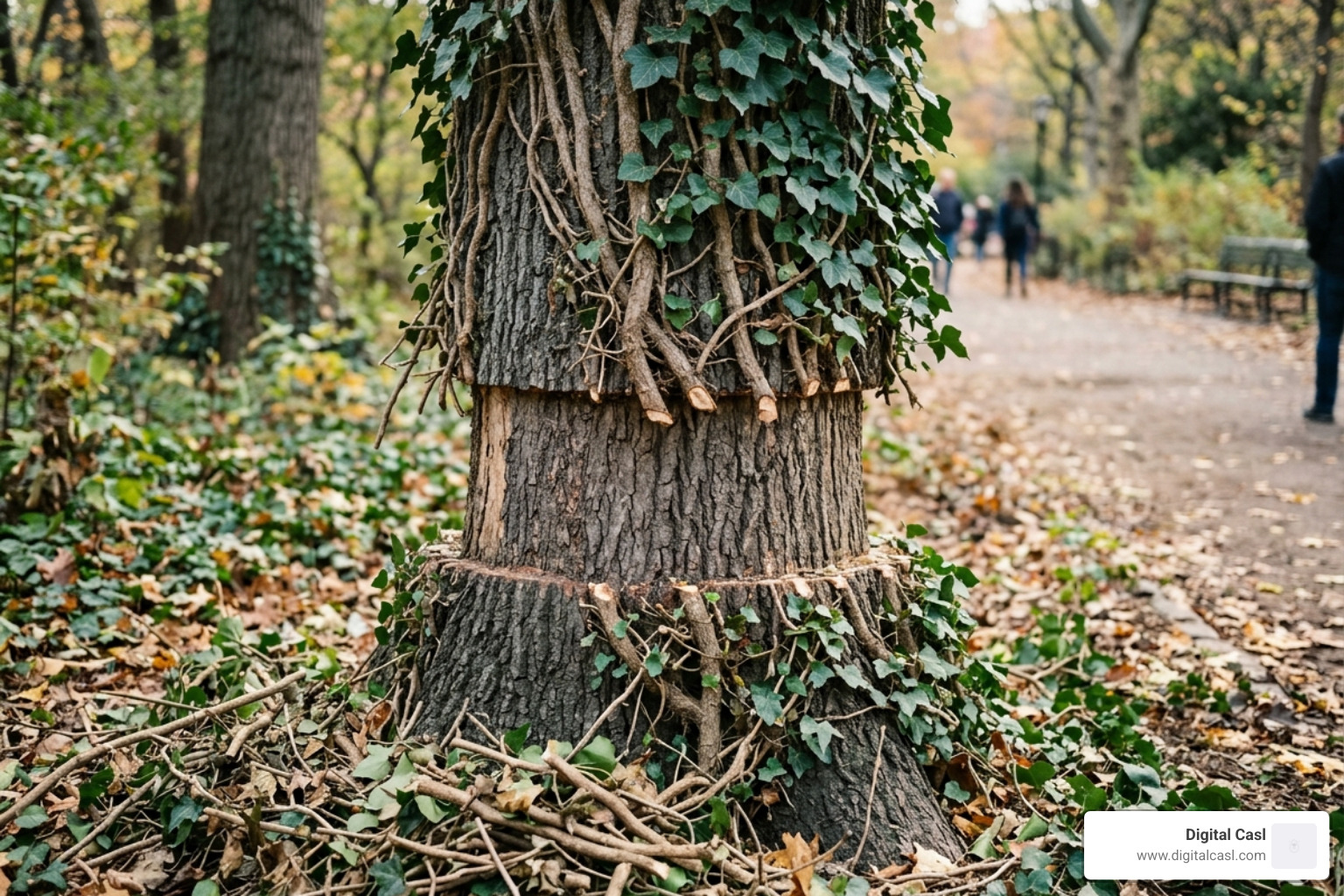
Sometimes, the “pest” isn’t an insect—it’s the ivy itself. When English ivy escapes the garden, it becomes an invasive species that can smother native plants and even topple mature trees. In these cases, ivy plant pest control means total eradication.
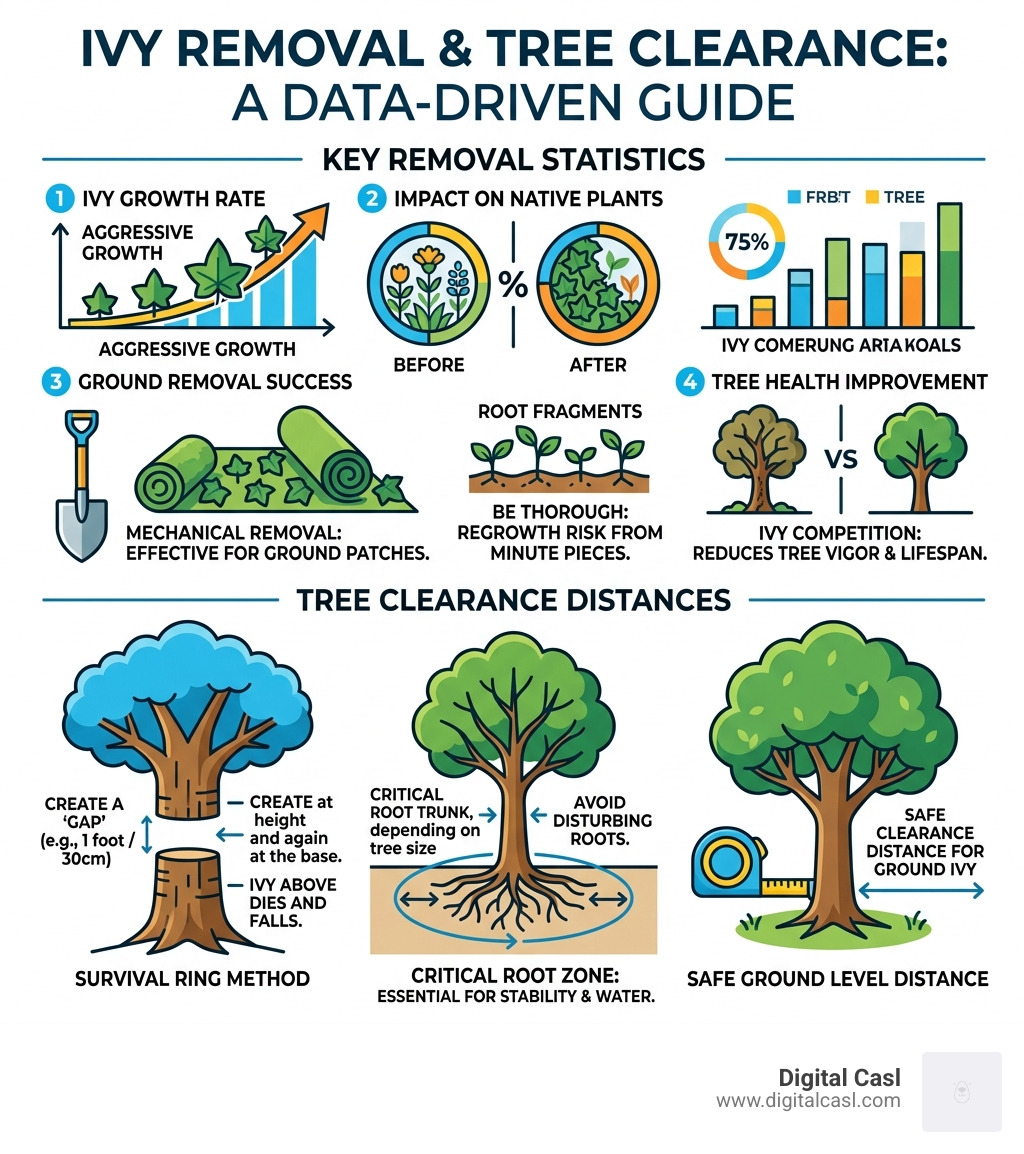
The “Survival Ring” Method If ivy is climbing a tree, do not try to pull the vines down—you might damage the tree’s bark or pull heavy branches onto yourself. Instead, cut the vines at chest height and again at the base of the tree. Remove the middle section to create a “gap.” The ivy above the cut will die and eventually fall off on its own.
Mechanical Removal For ground infestations, you can “roll” ivy like a carpet. Use a spade to cut a line through the ivy mat, then pull and roll it forward. Be thorough: ivy can regrow from tiny root fragments.
Chemical Eradication
- Glyphosate: A 2% to 3% solution is highly effective. It is a systemic herbicide, meaning it travels down to the roots. It’s best applied in the spring when the plant has 3 to 5 new leaves, as the waxy cuticle is thinner then.
- Triclopyr: Often used for woody vines, a 2% to 5% solution works well. However, research suggests glyphosate may be more effective for long-term control in some urban settings.
- Mulching: For a non-chemical way to kill large patches, apply at least 8 inches of mulch over the ivy. You must leave it there for at least 2 years to ensure the ivy is completely smothered.
Frequently Asked Questions about Ivy Plant Pest Control
How do I distinguish between scale insects and mealybugs on my ivy?
Look at the movement and the “fluff.” Mealybugs are soft-bodied and usually covered in a white, cottony or flour-like substance; they can move (albeit slowly). Scale insects look like hard, immobile bumps that are part of the plant’s stem or leaf. If you can scrape the bump off with a fingernail and it has a yellow or orange “goo” inside, it’s scale.
Is neem oil effective against all types of ivy pests?
Neem oil is a fantastic broad-spectrum treatment. It works on spider mites, aphids, mealybugs, and whiteflies. However, it is less effective against adult scale insects because of their hard shells. For scale, you are better off using a horticultural oil or manual removal with alcohol.
How often should I treat my ivy for a spider mite infestation?
Because spider mite eggs hatch every few days, a single treatment won’t work. You should treat the plant every 3 to 5 days for at least two to three weeks. This ensures you kill the adults, then the larvae that hatch later, before they have a chance to lay more eggs.
Conclusion
At Digital Casl, we believe that gardening should be a source of joy, not stress. While dealing with pests can feel overwhelming, ivy is one of the most resilient plants in the world. With a bit of patience, a soapy bath, and a watchful eye, you can keep your green walls and trailing baskets looking spectacular.
By following these ivy plant pest control tips, you’re not just saving a plant; you’re mastering the art of indoor gardening. Whether you are clearing an invasive patch in your yard or pampering a variegated Hedera helix on your bookshelf, we are here to provide the low-maintenance green solutions you need.
For more expert plant care tips and DIY solutions, visit us at Digital Casl. Happy growing!
